A Species Shaped By Absence

The first time I encountered the Mountain Bongo, it was not in a forest.
It was not standing silently beneath bamboo in the Aberdares, or moving like a shadow through the cold mist forests of Mount Kenya. I did not hear the crack of branches beneath its hooves or catch the flash of chestnut and white stripes disappearing into dense undergrowth.
I met it while paying for parking.
“Save the Mountain Bongo,” the sign read a familiar image printed against a backdrop most people probably glanced past without a second thought. For a moment, I did too. Then curiosity nudged me into a quick online search, just enough to understand what exactly a Mountain Bongo was and why it needed saving. I gathered enough information to hold a conversation about the species, tucked the name somewhere in my mind, and moved on.
And perhaps that is part of the Mountain Bongo’s tragedy.
It is one of Kenya’s rarest large antelops, yet so few of us know it exists.
Then came the news of four Mountain Bongos returning home to Kenya, descendants of animals whose bloodlines left these forests decades ago. Suddenly the species found its way back into my thoughts. But this time, as I began reading more deeply, something else unsettled me.
There was barely anything there.
Not because the Mountain Bongo lacks importance, beauty, or ecological significance, but because so much of its history feels fragmented. Scattered across conservation reports, old wildlife records, zoo archives, and scientific papers. Unlike Elephants, Lions, or Rhinos whose stories dominate documentaries and tourism campaigns, the mountain Bongo seems to exist at the edges of memory, elusive not only in the forest, but also in public consciousness.
A species shaped by absence.
The Mountain Bongo, a critically endangered antelope endemic to Kenya’s montane forests, once ranged across the Aberdares, Mount Kenya, the Mau Forest, Eburu, and the Cherangani Hills. In the 1960s, controlled hunting licenses were still being issued for the species, a decision that feels almost unimaginable today given how few remain in the wild.
By the 1980s, the population had entered a devastating decline.
Some were captured and exported to zoos abroad, many dying in transit. Others were lost to poaching, forest degradation, disease outbreaks like rinderpest, and increasing pressure on the forests they depended on. Predators such as hyenas preyed on weakened populations already struggling to survive.
Then, slowly, the Mountain Bongo disappeared.
The last widely recorded sighting of a wild Mountain Bongo at The Ark in the Aberdares came in 1988. After that, silence.
Or at least, near silence.
For years, conservationists searched dense forests for signs that the species still remained. The Bongo Surveillance Project modern day the Mountain Bongo project, was eventually formed to locate surviving animals and track their movements through camera traps and field monitoring. When the first trap-camera image of a wild mountain bongo finally emerged, it was more than evidence of survival. It was proof that the forest had not completely forgotten them.
Today, fewer than 100 Mountain bongos are believed to survive in the wild.
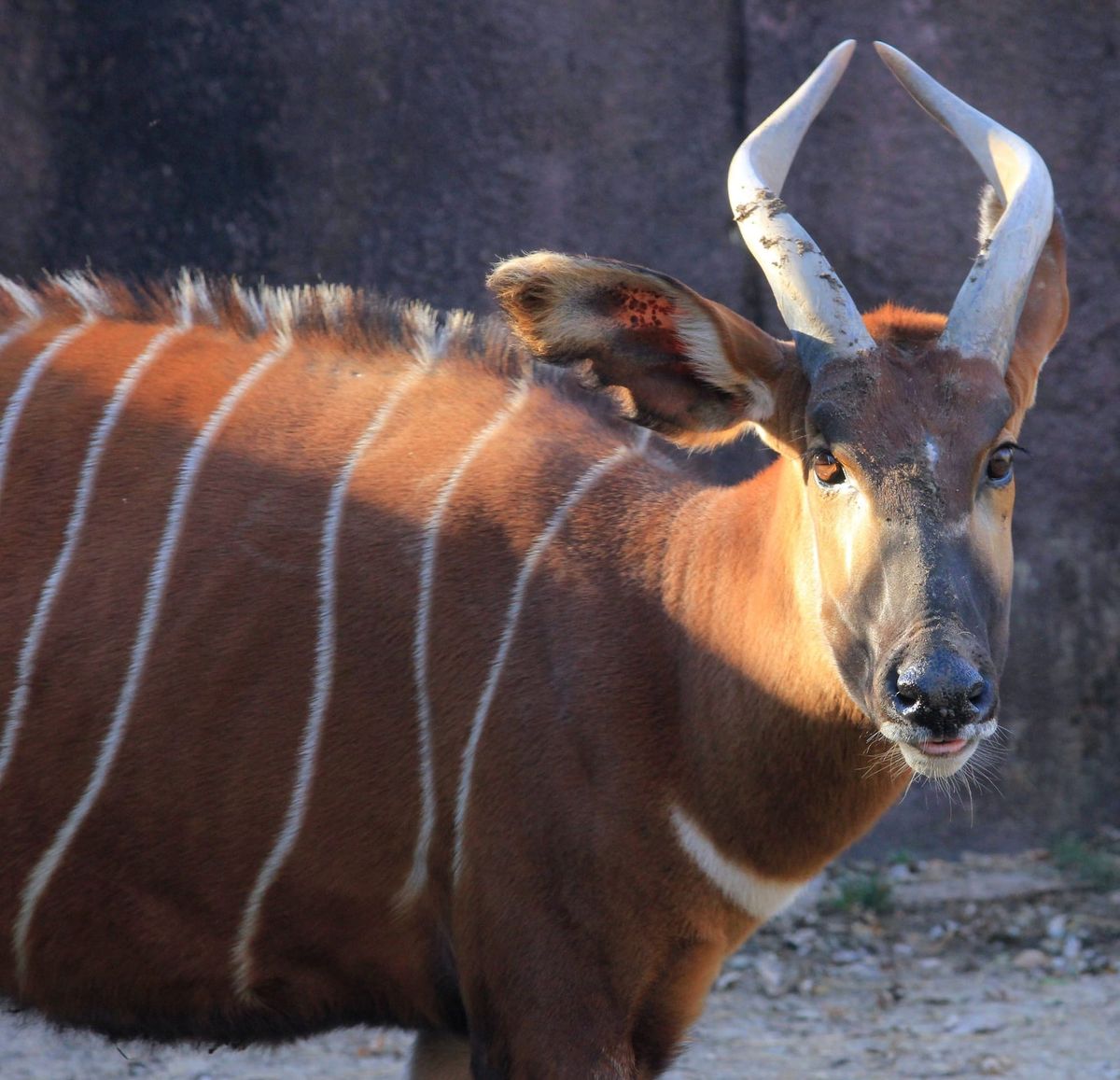
And perhaps what moves me most about this story is not only the rarity of the species, but how easily something so extraordinary can fade from view. The Mountain Bongo is not small. It is not insignificant. It is one of the largest forest antelopes in Africa, marked with striking white stripes against a deep chestnut coat, almost impossibly beautiful against the dark green forests it calls home.
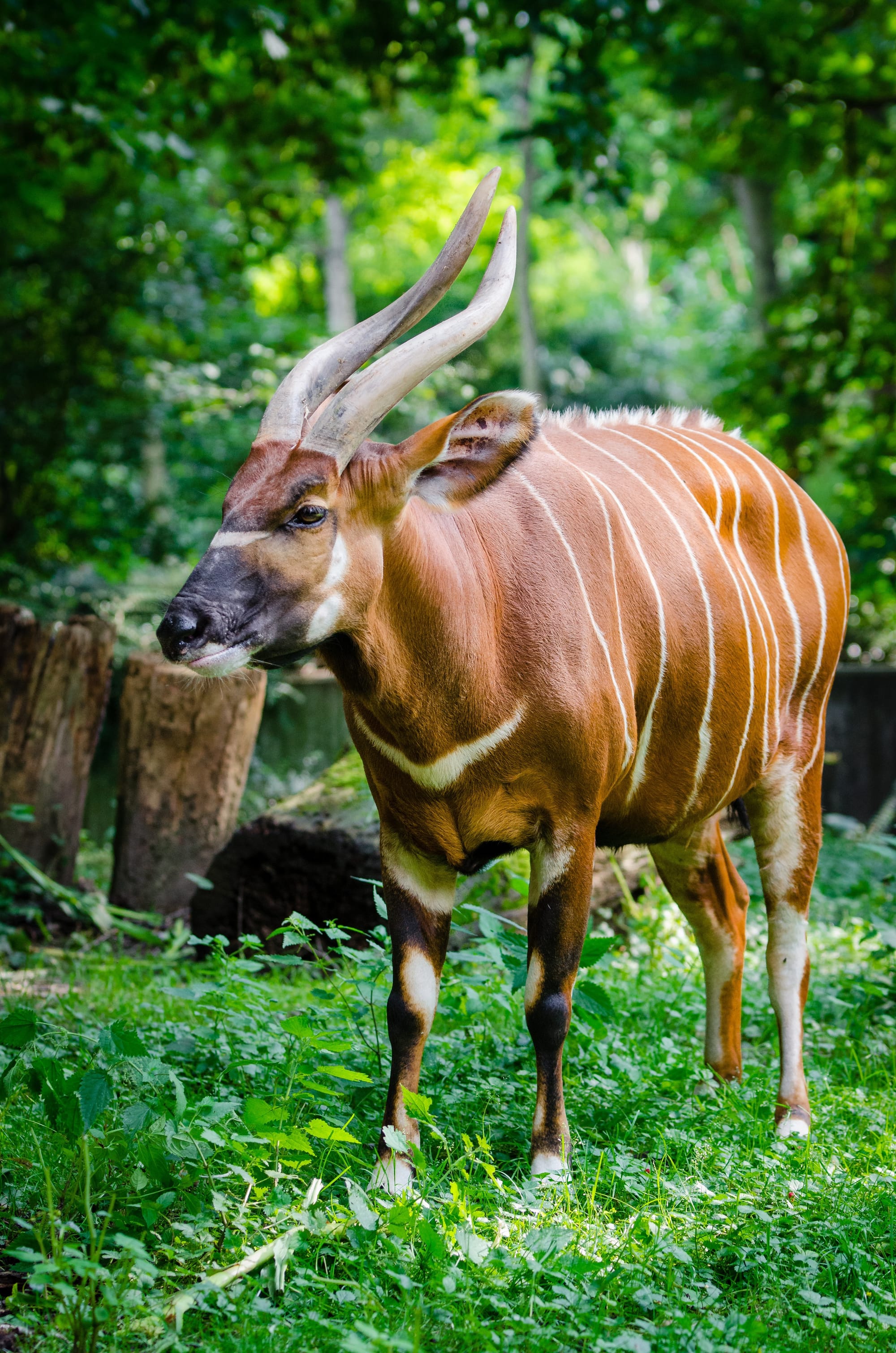
Yet many Kenyans may go their entire lives without ever hearing its story.
Maybe that is why the return of these Bongos feels symbolic in ways beyond conservation. It is not simply the return of animals to a landscape. It is the return of attention. Of memory. Of responsibility.
A reminder that extinction does not always happen loudly.
Sometimes it happens quietly, in forests we stop looking into, in species we stop speaking about, and in stories that slowly disappear from the national imagination.
And perhaps saving the Mountain Bongo begins there first: by remembering that it exists.
Sincerely,
Blue 💙
References:
Tusk. (2025, May 20). Mountain Bongo - Tusk. https://tusk.org/species/mountain-bongo/
Sandri, T., & Sandri, T. (2023, December 5). Meet the mountain bongo, the most beautiful animal you’ve (probably) never heard of. . .. Oryx—The International Journal of Conservation. https://www.oryxthejournal.org/blog/meet-the-mountain-bongo-the-most-beautiful-animal-youve-probably-never-heard-of/
Our history – Mountain Bongo Project. (n.d.). https://mountainbongo.org/our-history/