A Wild Orca Has Never Killed a Human

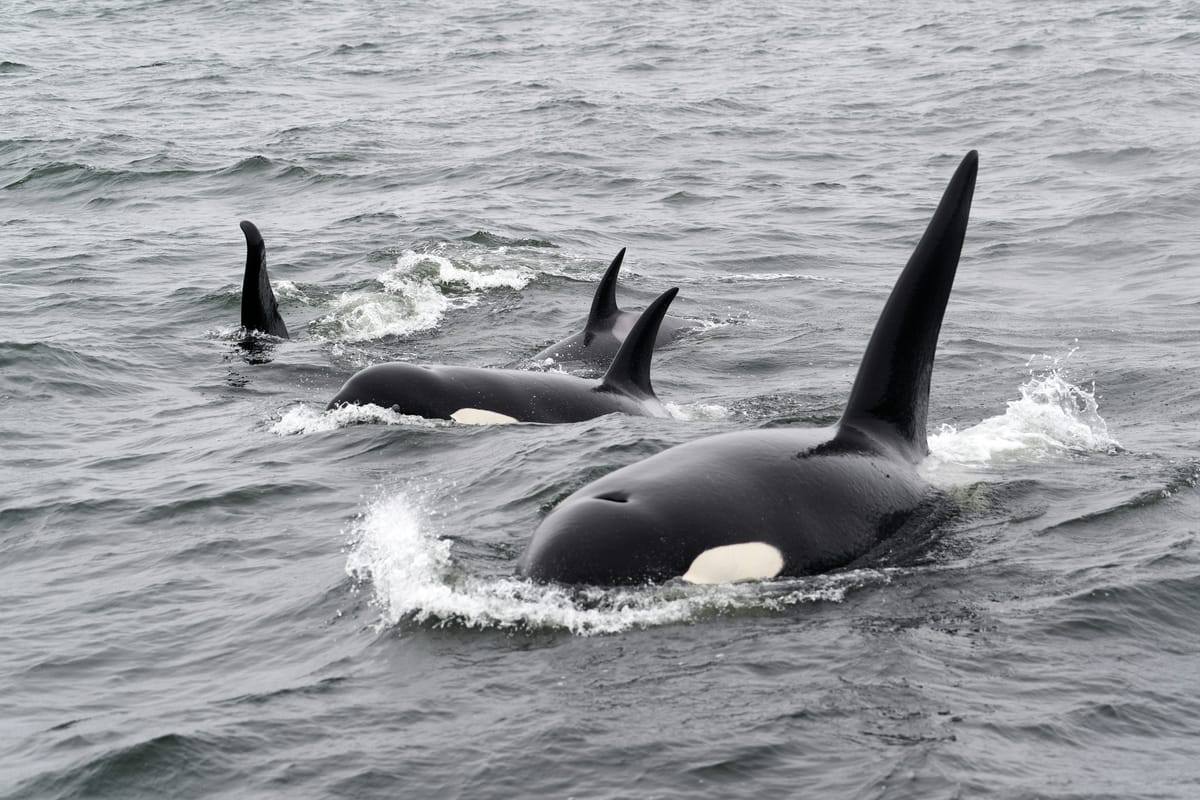
We’ve called them killers for centuries.
Long before we knew their names, their families, their languages, we stamped fear onto their black-and-white backs and sent the story drifting across oceans. It began with Basque sailors, men who carved myths into sea foam, watching orcas hunt great whales and muttering ballena asesina, whale killers. The world flipped the phrase to killer whales, and the ocean’s most misunderstood creature was born.
The truth is this: a wild Orca has never killed a human.
Not once. Not in the thousands of years we have shared this planet.
Orcas live in a world written in sound, a moving kingdom of echoes, belonging, and memory. When they speak, their voices travel through blue corridors that we will never fully understand. Each pod has its own dialect, its own way of saying hello, its own lullabies for calves and calls for hunting salmon. Some pods pass their knowledge across generations: how to chase a herring ball, how to sweep a seal off an ice floe with a perfectly timed wave, how to dive deep for prey that only the elders remember.
They are dolphins, technically the largest of their kind but they carry the quiet gravitas of whales. If you ever see one cut through the water, you’ll understand why ancient cultures called them guardians, brothers, ancestors. There is a steadiness to them. A knowing. A presence that feels older than storms.
They live everywhere: Arctic silver light, Antarctic blue deserts, warm tropical shallows where coral breathes like an underwater city. Yet they are not wanderers. Each family chooses a territory and becomes an expert in its secrets. Some orcas eat only fish. Some hunt seals. Some take on sharks. An entire identity shaped by geography as if the ocean itself is a mother teaching her children who they must become.
And still, outside this magnificent truth, their reputation clings: the killer whale, the fear, the shadow beneath the surfboard, the villain of stories that never asked them who they were. Fear spreads faster than understanding.
If we measured their nature by how they treat us, we’d find only curiosity. Divers tell stories of Orcas approaching with a gentleness that feels almost human, a tilted head, a lingering look, a shared breath of bubbles. Boats are inspected with polite interest. Calves peek from behind their mothers the way shy children hide behind a parent’s leg. We are aliens to them, yet they greet us with grace.
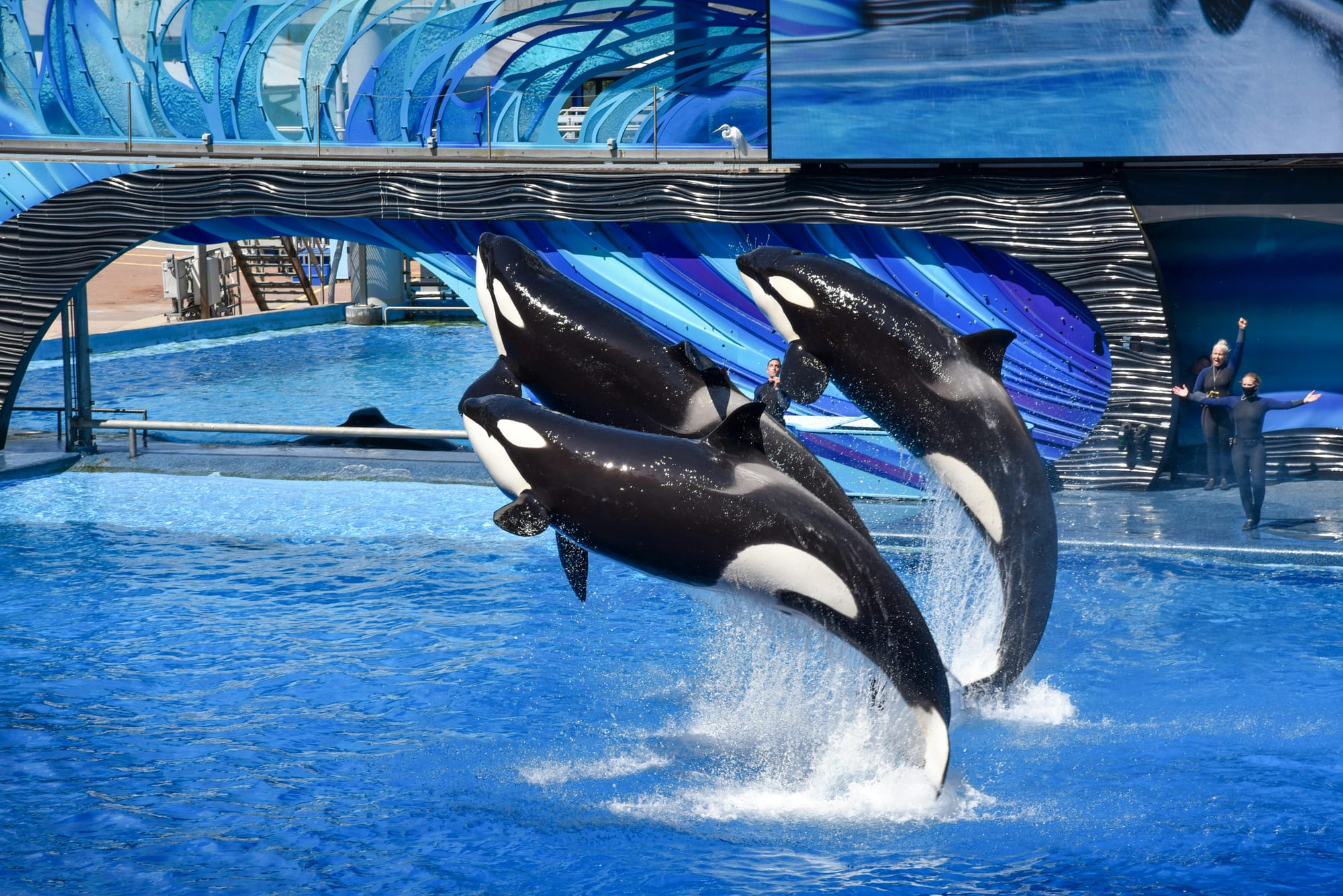
The only deaths linked to Orcas are the ones we engineered through captivity, where we shrank the ocean into a concrete bowl and asked brilliant, wandering, socially complex beings to perform tricks for crowds. In the wild they swim more than a hundred kilometers a day; in captivity they circle the same pool like a ghost stuck in its own loop. Their teeth wear down from chewing metal bars. Their dorsal fins collapse. Their language that beautiful, inherited dialect dissolves into silence.
Tilikum’s (beloved Orca) name rises here like a bruise on history. Stolen as a calf. Isolated. Trained through deprivation. And blamed when he finally broke. Not because he was a killer. Because captivity unravels everything wild animals are meant to be. I once wrote about zoos, friend or foe? and how Harambe’s (a western lowland Gorilla) death became a symbol of our failure to understand the boundaries between wildness and ownership. Orcas carry that same wound, only theirs is underwater and quieter.
In the open ocean, Orcas hold their families together for life. Grandmothers lead. Mothers teach. Sons stay by their mothers’ sides until the end. When one dies, the grief travels through the pod like a storm shadow. There are stories of Orca mothers carrying dead calves for days, unwilling to release them to the sea. We call this behavior “non-human personhood” now, a scientific attempt to name something ancient cultures already understood: that these beings feel deeply.
Yet the world they belong to is weakening.
Pollution seeps into their skin.
Salmon disappear.
Engines drown out their voices.
The water warms too fast, moving prey to places they have not learned to hunt.
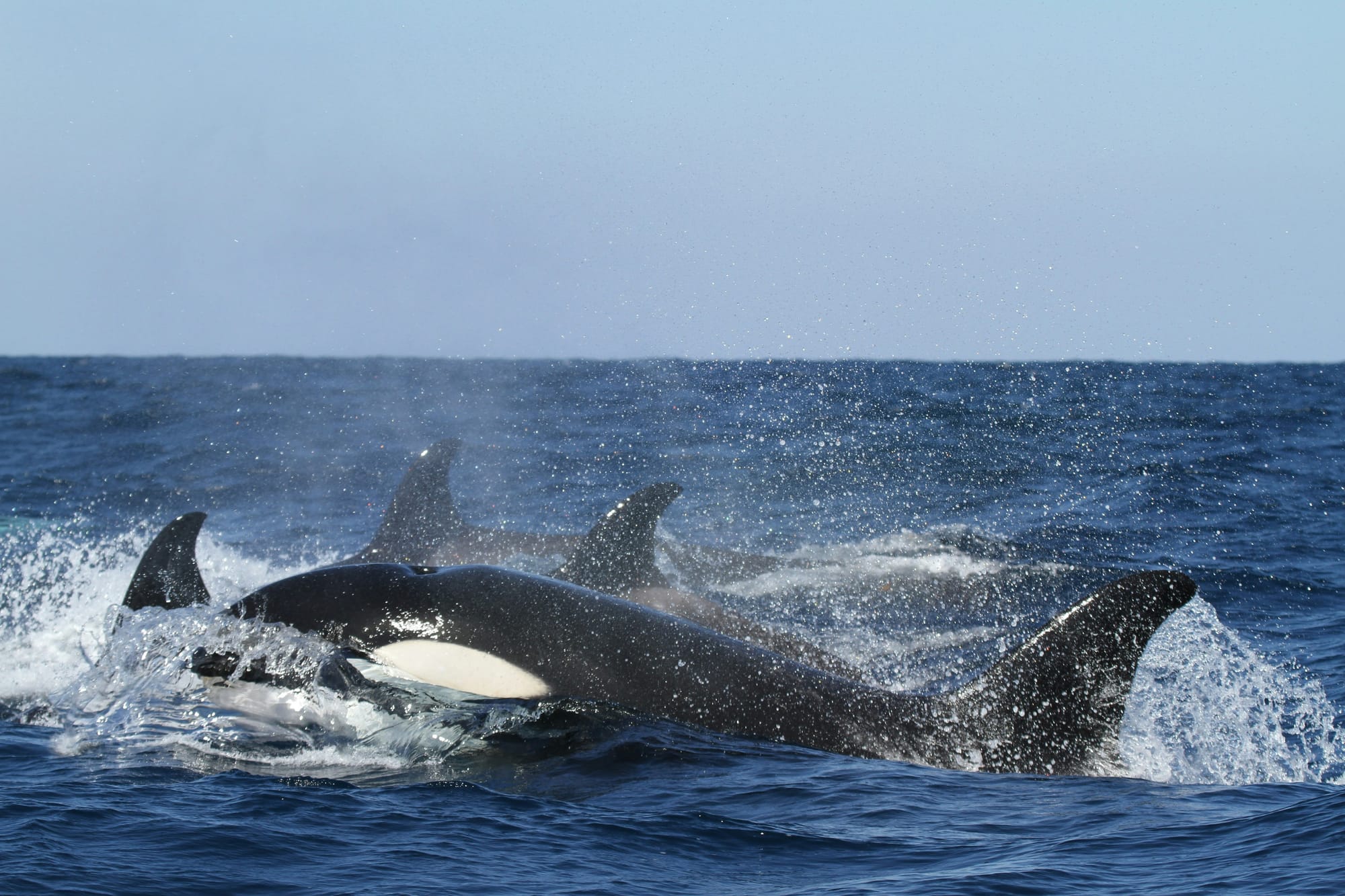
And perhaps the most troubling thing is how little we know about Orca populations, the IUCN has classified them as data deficient. They are ghosts on the data sheets. Shadows in our uncertainty.
That, more than anything, should unsettle us.
How can we protect what we barely understand?
But maybe understanding begins with story, not statistics.
Maybe it begins with meeting the Orca again, not as a monster but as a mirror a creature that holds family above all else, that thrives in community, that teaches through generations, that sings to the sea as if the ocean were a living diary.
Maybe all we need to do is tell the truth simply, beautifully, and without fear:
A wild Orca has never killed a human.
Sincerely,
Blue 💙
Citations:
Ford, J. K. B., Ellis, G. M., & Balcomb, K. C. (2000). Killer whales: The natural history and genealogy of Orcinus orca in British Columbia and Washington State. UBC Press.
International Union for Conservation of Nature (IUCN). (2024). Orcinus orca (killer whale) Red List assessment. https://www.iucnredlist.org
NOAA Fisheries. (2023). Killer whale (Orcinus orca): Species description and conservation status. https://www.fisheries.noaa.gov/species/killer-whale
O’Barry, R. (2015). Behind the dolphin smile: The true story of a marine mammal captivity survivor. Earth Island Institute.
Visser, I. N. (2019). Orca culture, ecotypes, and the global diversity of killer whales. Marine Mammal Science, 35(4), 1335–1351. https://doi.org/10.1111/mms.12616
Wright, A. J., & Highfill, L. (2020). The welfare of captive killer whales (Orcinus orca). Journal of Marine Animals and Their Ecology, 12(2), 15–23.
Nature, W. S. P. |. B. T. (2024, May 20). Tilikum: The Whale Who Rebelled - The Whale Sanctuary Project | Back to Nature. The Whale Sanctuary Project | Back to Nature. https://whalesanctuaryproject.org/whales/tilikum-the-whale-who-rebelled/
Tyson, L., PhD. (2025, August 5). Harambe’s Legacy: Neither Animals nor Humans Are Safe at Zoos. Born Free USA. https://www.bornfreeusa.org/2025/07/28/harambes-legacy-neither-animals-nor-humans-are-safe-at-zoos/