The River’s Oldest Resident
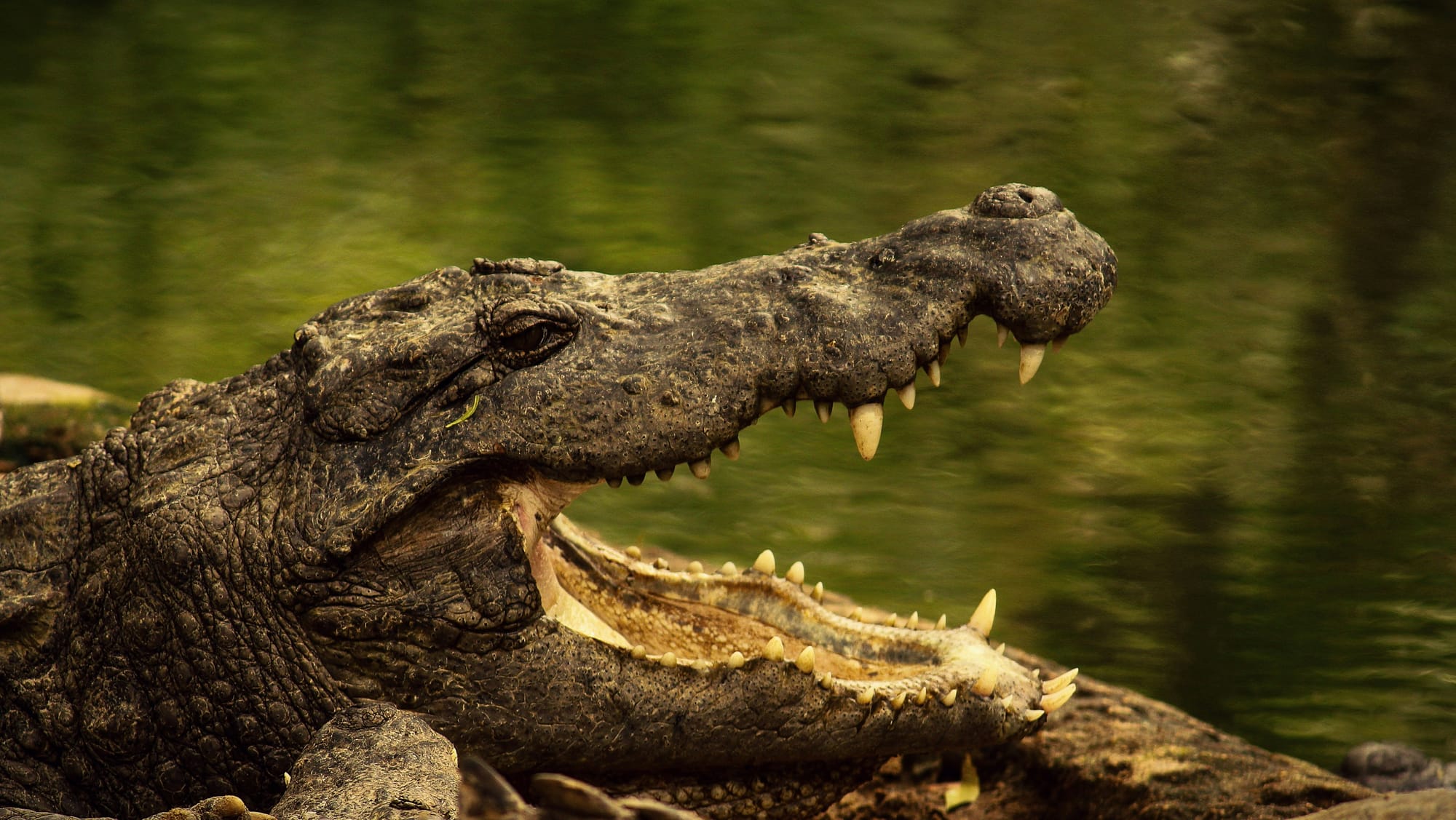
At first you don’t see it.
You see the river instead, its slow bronze surface breathing under the afternoon sun, dragonflies stitching light across the water, the reeds unmoving as if the wind forgot this place existed.
Then something interrupts the illusion.
Not movement.
Stillness.
A shape too deliberate to be driftwood.
Two raised eyes.
A line of armored back plates breaks the reflection of the sky.
And suddenly you are looking at an animal that was already ancient when the dinosaurs disappeared.
The crocodile.
Crocodilians appeared during the late Triassic period over 200 million years ago and survived the mass extinction that ended the age of dinosaurs roughly 66–80 million years ago. Their body plan changed very little because it never needed to. Evolution did not forget them; it refined them early and left them alone.
A crocodile is proof that some designs work so well that time has no corrections to make.
Today there are 20+ species spread across Africa, Australia, Asia, and the Americas. None exist in Europe or Antarctica; they are creatures of warmth. As ectothermic animals, they cannot generate their own body heat, so they live where the sun can do it for them: rivers, wetlands, mangroves, and slow tropical waters.
They spend hours basking not in laziness, but in physics, calibrating their metabolism to the temperature of the world (thermoregulation).
Their bite force, measured at over 3,700 PSI in the saltwater crocodile, is the strongest recorded in any living animal. Yet the muscles that open their jaws are so weak that a human hand can hold them shut.
Their skin is an instrument panel. Tiny pressure sensors along their jaws detect vibrations in water, allowing them to hunt in darkness. Their eyes see at night. Their hearing is acute. In short bursts, they can swim nearly 30 km/h, but they prefer stillness as their primary weapon.
They are ambush predators because energy matters more than speed. We have all heard of the infamous death roll.
After feeding, they may rest for a full day, entering unihemispheric sleep half the brain asleep, the other half awake, one eye open. Even in rest, awareness remains.
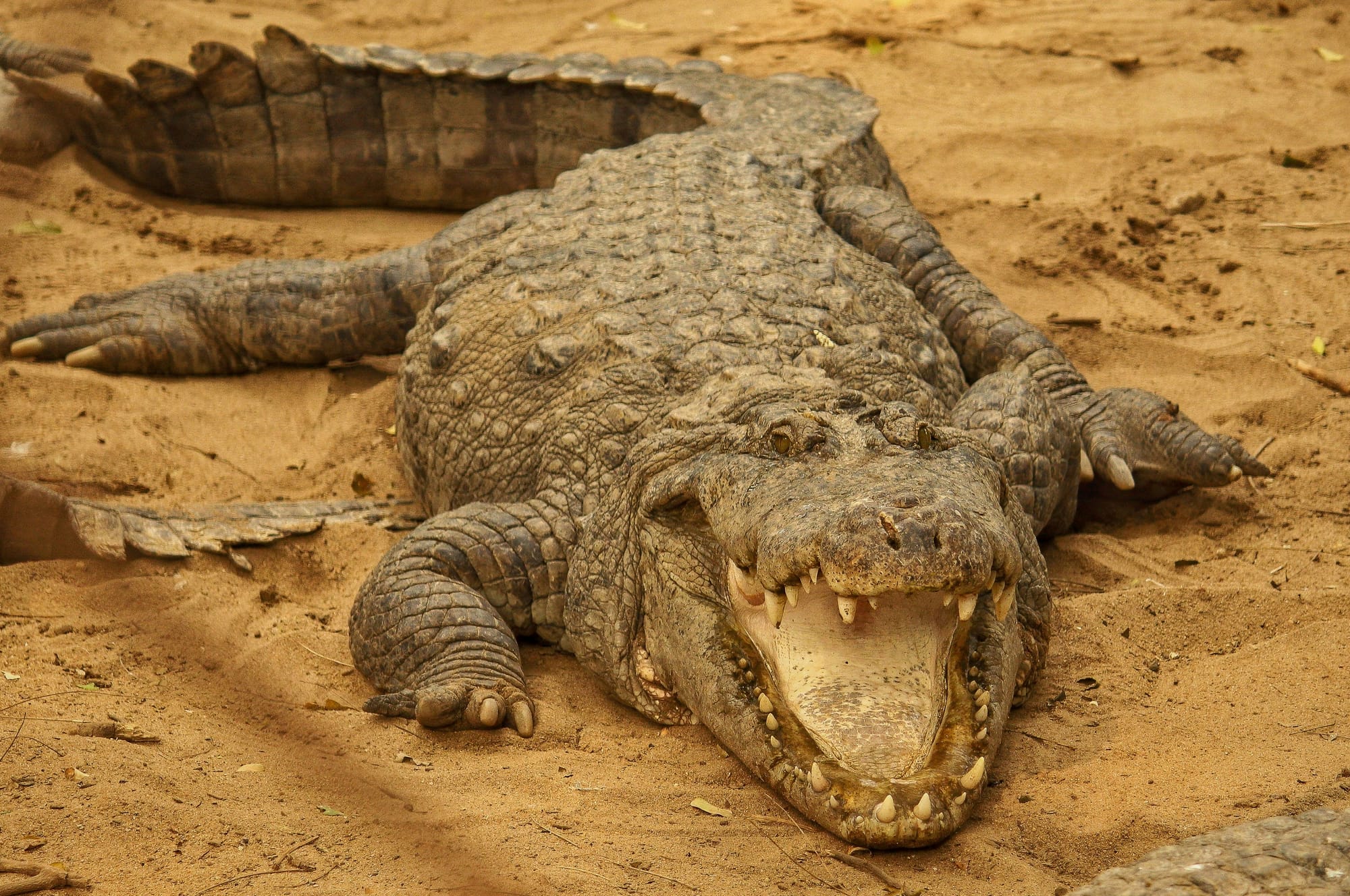
Interestingly, crocodilians are more closely related to birds than to lizards. Who would have thought, right? Both belong to the lineage Archosaurs, which once ruled land, air, and water. In evolutionary terms, a crocodile has more in common with an egret standing on its back than with the reptile beside it.
A female crocodile lays between 30 and sometimes up to 80 eggs in a carefully constructed nest of sand and vegetation. For nearly three months, she guards them against predators.
And when the hatchlings begin to chirp from inside the eggs, she does something that reshapes the story entirely.
She opens the nest.
Gently, she carries her young in her mouth, the same jaws capable of crushing bone, and releases them into the water, revealing a tenderness rarely associated with a creature defined by aggression.
The temperature of the nest determines their sex: warmer nests produce males, cooler nests produce females. Climate change is now altering this balance in some populations, quietly reshaping future generations before they are even born.
Although they lay many eggs, their mortality rate is daunting. Few survive. Birds, fish, flooding, and starvation take most within their first year.
Those who do remain near their mother for years.
The river’s most feared predator begins life as one of its most vulnerable.
Adult crocodiles have almost no natural predators. They regulate fish populations, remove weak animals, recycle nutrients, and shape how other species use the river. An ecosystem with crocodiles behaves differently than one without them.
They are not simply inhabitants of wetlands.
They are architects of them.
Yet their greatest threat is neither drought nor rival predators, humans it is.
In the Philippines, a 20-foot-3-inch saltwater crocodile named Lolong was captured and held in captivity after suspected attacks. He died about a year later, likely from stress and illness due to captivity. Yet he had survived half a century in the wild.
Crocodiles have no natural predators but of course the human species is a major threat to these living, breathing museums.
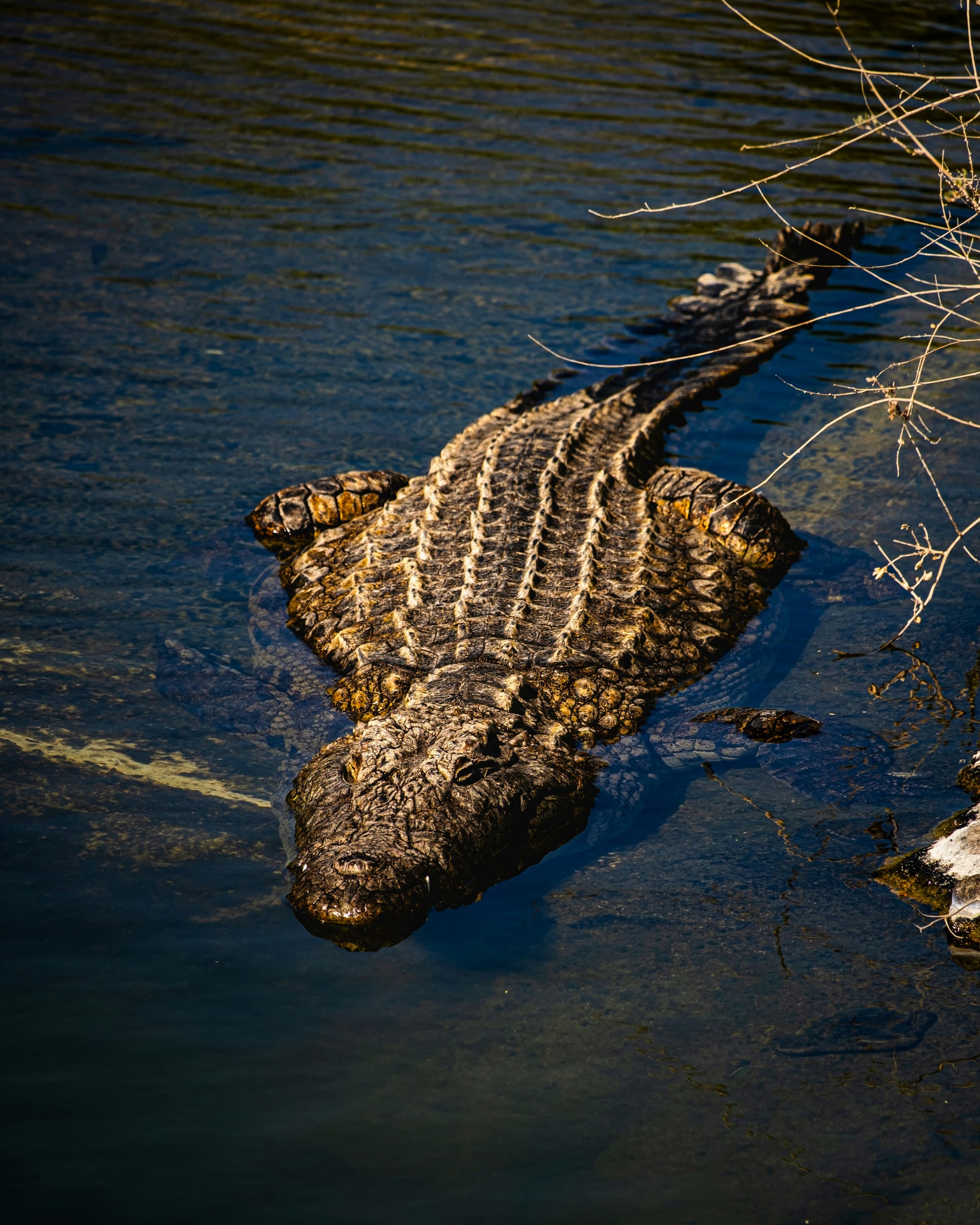
We illegally hunt for the latest handbag to carry on your shoulder. The demand for crocodile skin is so high we have even created crocodile farms to feed it. Among other pressures are habitat degradation, pollution of their once-pristine waters, human–wildlife conflict born from our encroachment into their rivers, fishing-gear entanglement, traditional medicine trade, and climate change warming nests and producing dangerously skewed generations dominated by males.
They may have survived the mass extinction that wiped out the dinosaurs, but will they survive the human race? As is the case with many species…
Today, several stand on the edge: the Chinese alligator, Siamese crocodile, Philippine crocodile, Orinoco crocodile, and the West African slender-snouted crocodile.
Sincerely,
Blue
What this letter leans on.4 resources
- I.
Compelling crocodile facts. (2023, October 6). World Animal Protection Australia.
- II.
Desk, T. L. (2024, September 17). 10 largest crocodiles in the world. The Times of India
Read - III.
Lolong — Maready Evergreen. (n.d.). Maready Evergreen
Read - IV.
Schubiger, V. (2025, September 2). Crocodile Lifespan: How Long Do Natures Largest Reptiles Live? AZ Animals
Read